
With the booming development of global cosplay culture, role-playing has moved from a subculture to the mainstream entertainment market. According to industry research institutions, the global cosplay-related market size will exceed $5 billion by 2025, with masks, as the core props for character creation, experiencing an average annual demand growth of over 15%. From Anime Cosplay Masks to Game Character Masks, from traditional theater to futuristic science fiction, the categories of masks are constantly expanding. From material innovation to design upgrades, from manufacturing to technological innovation, the cosplay mask industry is undergoing a transformation from "functional fulfillment" to "experience upgrade."
I. Market Trends: From "Single Function" to "Personalized Expression"
The current cosplay mask market presents three core trends:
Surge in Demand for Specific Scenarios: In addition to traditional anime conventions, themed parties, immersive theater, and film shooting scenarios place higher demands on the durability, breathability, and visual effects of masks. For example, film-grade masks need to meet the comfort requirements of prolonged wear, while stage performance masks emphasize dynamic effects under lighting. Furthermore, masquerade party masks, due to the expansion of social occasions, are gradually transforming from European classical styles to modern minimalist designs, becoming a new choice for party attire for young consumers.
Personalized customization is becoming mainstream: Generation Z consumers' pursuit of a "one-of-a-kind" role experience is driving the growth in demand for mask customization services. According to research, over 60% of cosplay enthusiasts are willing to pay a premium for customized designs, with 3D printing technology becoming a key tool in the customization field due to its ability to achieve complex shapes. Custom masks are not limited to character recreation but also extend to cross-industry collaborations such as brand partnerships and IP derivatives. For example, a limited-edition mask launched in collaboration with a mask manufacturer by an anime IP sold out immediately upon release.
Sustainable materials are gaining attention: Increased environmental awareness is prompting the industry to explore biodegradable and recyclable materials. For example, new environmentally friendly materials such as bio-based resins and plant fiber composites are beginning to be used in mask production, reducing environmental burden and aligning with young consumers' preference for "green consumption."
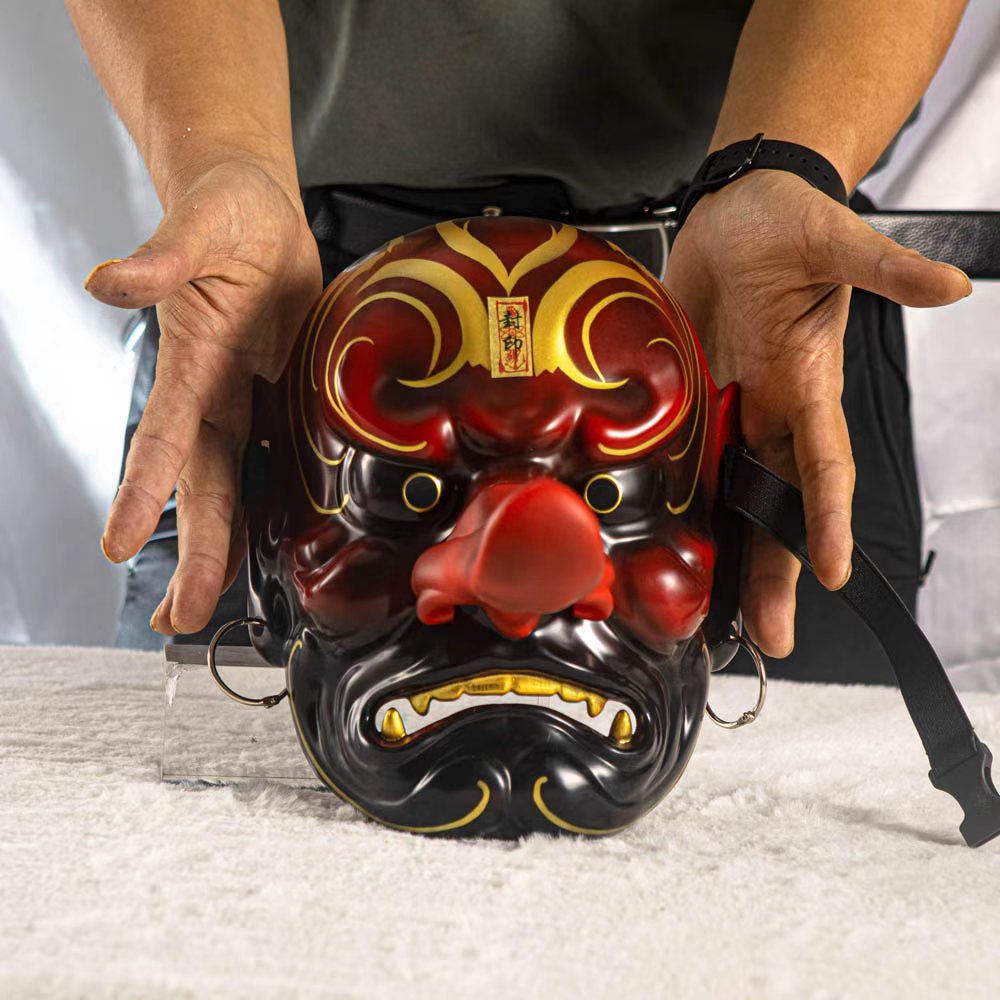
II. Material Characteristics: Balancing Safety, Comfort, and Expressiveness
Mask materials directly affect the wearing experience and character accuracy. Common materials and their characteristics are as follows:
Resin Materials: Primarily ABS resin and polycarbonate (PC), these materials are characterized by high strength and ease of molding, making them suitable for complex designs. However, traditional resin masks have poor breathability, which can lead to stuffiness with prolonged wear. Improvements include developing porous structures or adding antibacterial coatings to enhance comfort.
Silicone and TPE Materials: Silicone is the preferred material for high-end masks due to its softness, skin-friendliness, and excellent elasticity, especially suitable for scenarios requiring a close facial fit (such as animal characters or realistic styles). TPE (thermoplastic elastomer) combines the advantages of plastics and rubber, offering lower cost and recyclability, and is gradually becoming the mainstream material for environmentally friendly masks.
Composite Materials: By combining carbon fiber, glass fiber, and resin, lightweight and high-strength masks can be achieved. For example, some film-grade masks use a carbon fiber frame + silicone outer layer structure, reducing weight by 40% compared to traditional materials while maintaining impact resistance.
New environmentally friendly materials, such as corn starch-based biodegradable resins and bamboo fiber composites, while more expensive, meet the needs of long-term sustainable development. Some manufacturers have begun piloting these materials, targeting the high-end customization market and environmentally themed events.
III. Manufacturing: From Manual to Intelligent, Improving Both Efficiency and Precision
Traditional mask production relies on manual carving and mold forming, which is time-consuming and costly. In recent years, digital technology has driven the industry towards intelligent transformation:
3D Scanning and Modeling: High-precision 3D scanners acquire facial data from actors, and combined with CAD software to design mask models, enabling "custom-made to fit individual faces" and reducing trial-and-error costs.
Popularization of 3D Printing Technology: Solidification Laser (SLA) and Fused Deposition Modeling (FDM) technologies have shortened the production cycle of complex mask structures from weeks to days, and support small-batch customized production.
Automated Production Lines: Some manufacturers have introduced robotic arms for material cutting, spraying, and other processes, improving production efficiency while ensuring product consistency. For example, one company used an automated spraying line to control the coloring error of masks to within 0.1mm, significantly reducing rework rates.
Standardized Quality Inspection: The industry is pushing for the establishment of mask safety standards, including material toxicity testing, breathability testing, and structural strength certification, to ensure products comply with international safety regulations (such as the EU EN71 toy safety standard).

IV. Technological Innovation: Driving Experience Upgrades and Scenarios Expansion
Technological advancements bring more possibilities to mask design:
Dynamic Lighting Effect Integration: By embedding LED light strips or flexible displays, masks can achieve dynamic effects such as blinking and emitting light, enhancing character expressiveness. For example, LED Glowing Masks have become standard at electronic music festivals and nightclubs, controlling lighting modes via a mobile app and supporting customized patterns synchronized with the rhythm, making them popular among young people.
Intelligent Sensor Applications: Some high-end masks integrate temperature and humidity sensors, which can monitor the wearing environment in real time and adjust ventilation, solving the problem of stuffiness from prolonged wear.
AR/VR Fusion: Combining AR technology, masks can interact with virtual scenes, creating a "virtual-real" role-playing experience. For example, an AR mask launched by one company can recognize gestures through a camera to trigger specific animation effects, and has been applied to technology-themed exhibitions.
V. Procurement and Application Recommendations: Matching Scenario Needs, Balancing Cost and Quality
Define the Usage Scenario: For film and television shooting, prioritize lightweight and breathable materials; for theme parks, focus on mask durability and safety certifications.
Assess Supplier Technical Capabilities: Prioritize manufacturers with 3D modeling and automated production capabilities to ensure customized needs and efficient delivery.
Consider Material Environmental Friendliness: If the target market is Europe and America, confirm in advance whether the materials comply with local environmental regulations (such as REACH certification).
Test Samples and Experience: Request samples from suppliers before purchasing, focusing on testing wearing comfort, visual clarity, and movement flexibility.
The selection of cosplay masks has evolved from simply "matching appearance" to a comprehensive consideration of "technology, materials, and experience." Whether it's the classic recreation of anime masks or the creative breakthroughs of horror masks, technological innovation is reshaping the boundaries of masks. With the popularization of technologies such as 3D printing and intelligent sensing, masks will be more deeply integrated into the entire role-playing process in the future, becoming a bridge connecting the virtual and the real, art and technology. For buyers, keeping up with industry trends and balancing innovation and cost are essential to gaining an advantage in fierce market competition.